AI Task Automation Cloud Sync for Remote Teams: Top 5 Picks
Your team is drowning in task updates scattered across five different apps. Some tools charge per seat while your headcount keeps shifting, and others sync so poorly that remote workers miss assignments entirely. That gap between where tasks get assigned and where they actually get done is why so many teams start hunting for alternatives.
This article breaks down what to look for in AI task automation cloud sync tools, from key features to pricing and scalability. Then we compare five options, starting with Tasks.Bot as our top overall pick, so you can match the right tool to your team's workflow and make a confident decision.
What to Look For in AI Task Automation Cloud Sync Tools
Evaluating AI task automation cloud sync tools requires balancing automation depth, integration breadth, and cost predictability for distributed teams. Remote and hybrid workforces depend on software that routes tasks automatically, keeps data consistent across cloud apps, and supports asynchronous collaboration across time zones.
Two lenses matter most during evaluation. The first is core feature fit: whether a platform offers the sync, triggers, and workflow building blocks a distributed team actually needs day to day. The second is pricing and scalability: how costs behave as headcount, automation volume, and integration needs grow.
The subsections below break down both lenses so you can compare options on substance rather than marketing claims.
Key Features for Remote Teams
Remote teams should prioritize tools that offer real-time synchronization, cross-platform compatibility, and no-code automation with event triggers and webhooks. These capabilities determine whether work moves forward when nobody is online at the same time.
A practical checklist for evaluating any AI task automation platform includes:
- Native mobile and desktop apps so team members can act on tasks from any device without switching to a browser
- Real-time synchronization that pushes status changes, comments, and file updates to every connected app within seconds
- Scheduled tasks and conditional logic for recurring routines and branching rules, such as escalating overdue items
- Multi-step workflow builders that chain several actions together without writing code
- API connectivity and app connectors linking task management software, chat platforms, cloud storage, and file sharing tools
Each feature supports asynchronous collaboration in a specific way. Real-time synchronization removes the lag that forces teammates to ask for status updates. Conditional logic handles decisions overnight, so a request submitted in one time zone is already routed when another region logs on.
Missing features create predictable friction. Without event triggers, someone must manually hand off work between apps, which slows response times. Without conflict resolution, two people editing the same record can overwrite each other, undermining data consistency and version control.
Integration platforms such as Zapier, Make, n8n, Microsoft Power Automate, and IFTTT connect many of these systems, and tools like Slack, Google Workspace, Microsoft Teams, Jira, Airtable, Notion, Trello, Asana, ClickUp, and Monday.com each cover part of the picture. What matters is whether the automation layer keeps them in step without constant human intervention.
Pricing and Scalability Considerations
Pricing models for AI task automation tools vary widely, so teams must evaluate cost per user, automation limits, and scalability as headcount grows. The cheapest entry plan often becomes the most expensive option once a distributed workforce depends on it daily.
Common structures include:
- Per-user pricing, where costs rise linearly with every seat added
- Per-workspace pricing, which can favor larger teams but cap the number of workspaces
- Tiered pricing by automation runs, where each task execution or workflow step counts against a monthly quota
Hidden costs deserve close attention. Premium integrations, advanced logic, or higher run limits are frequently locked behind upper tiers. Overage fees for exceeding automation quotas can appear mid-month, and storage limits on cloud storage or file sharing may force an upgrade earlier than expected.
To calculate total cost of ownership, add onboarding and training time to the subscription price. A platform with a steeper learning curve may need paid setup help or weeks of internal ramp-up, which offsets a lower license fee. Factor in administrative overhead too, since someone must maintain connectors and troubleshoot failed workflows.
Scalability questions to ask before committing:
- Does the price per seat stay flat as the team doubles?
- Are automation runs pooled across the workspace or capped per user?
- Can the platform handle more app connectors without moving to an enterprise tier?
Experts recommend modeling costs at your expected headcount twelve months out, not just today's team size. A tool that scales predictably usually costs less over time than one with a low entry price and steep upgrade path.
1. Tasks.Bot - Best Overall
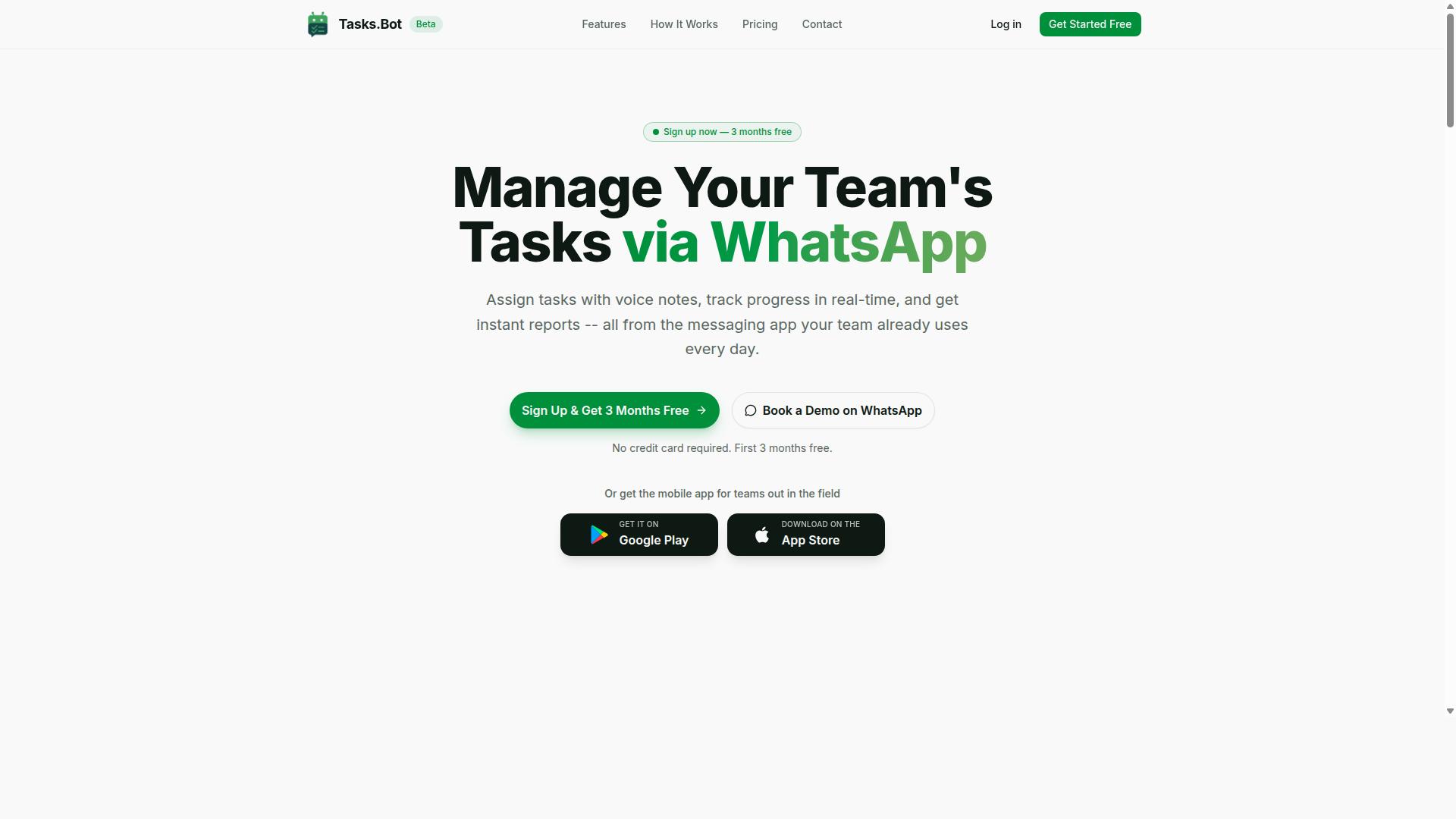
Tasks.Bot stands out as the best overall AI task automation cloud sync tool by operating entirely within WhatsApp, eliminating the need for team members to install new software or create accounts. For a distributed workforce already living in a messaging app, that single design choice removes the biggest barrier to adoption: getting everyone onto yet another platform.
It combines task assignment, progress tracking, and reporting inside WhatsApp, with Android and iOS apps available for field staff who need push notifications, voice capture, or a home screen widget. The result is AI task automation that fits existing habits rather than fighting them.
Standout Features and Pricing
Tasks.Bot's standout features include voice note task creation, automatic task assignment, smart deadline reminders, approvals, and instant reports, all accessible via WhatsApp and a mobile app. The platform uses AI to understand user intent and create tasks from messages, which keeps asynchronous collaboration moving without manual data entry.
Beyond the core task flow, the feature set covers tasks on a map, a live day tracker, face-verified attendance, and shifts, leave, and hours management. These additions matter for remote and field teams where verifying who was where, and when, is part of daily operations.
- Voice note task creation for quick capture on the move
- Automatic task assignment so work routes to the right person
- Smart deadline reminders to reduce missed due dates
- Approvals and automations for repeatable sign-off steps
- Instant reports for visibility into progress
- Tasks on a map, live day tracker, and face-verified attendance
- Shifts, leave, and hours management
Pricing sits on a single Full Access plan that includes every feature. The monthly plan costs ₹200 per member per month, while the annual plan is ₹1,200 per year per member, a saving of 50% and ₹1,200 per year per member. Currency can be selected in Indian Rupees or US Dollars, and both options should be verified at checkout.
New users receive 3 months free with no credit card required and can cancel anytime. The service is currently in beta, and a refund policy exists, so teams evaluating it for a wider rollout have a low-risk way to start.
2. Reminderly.ai
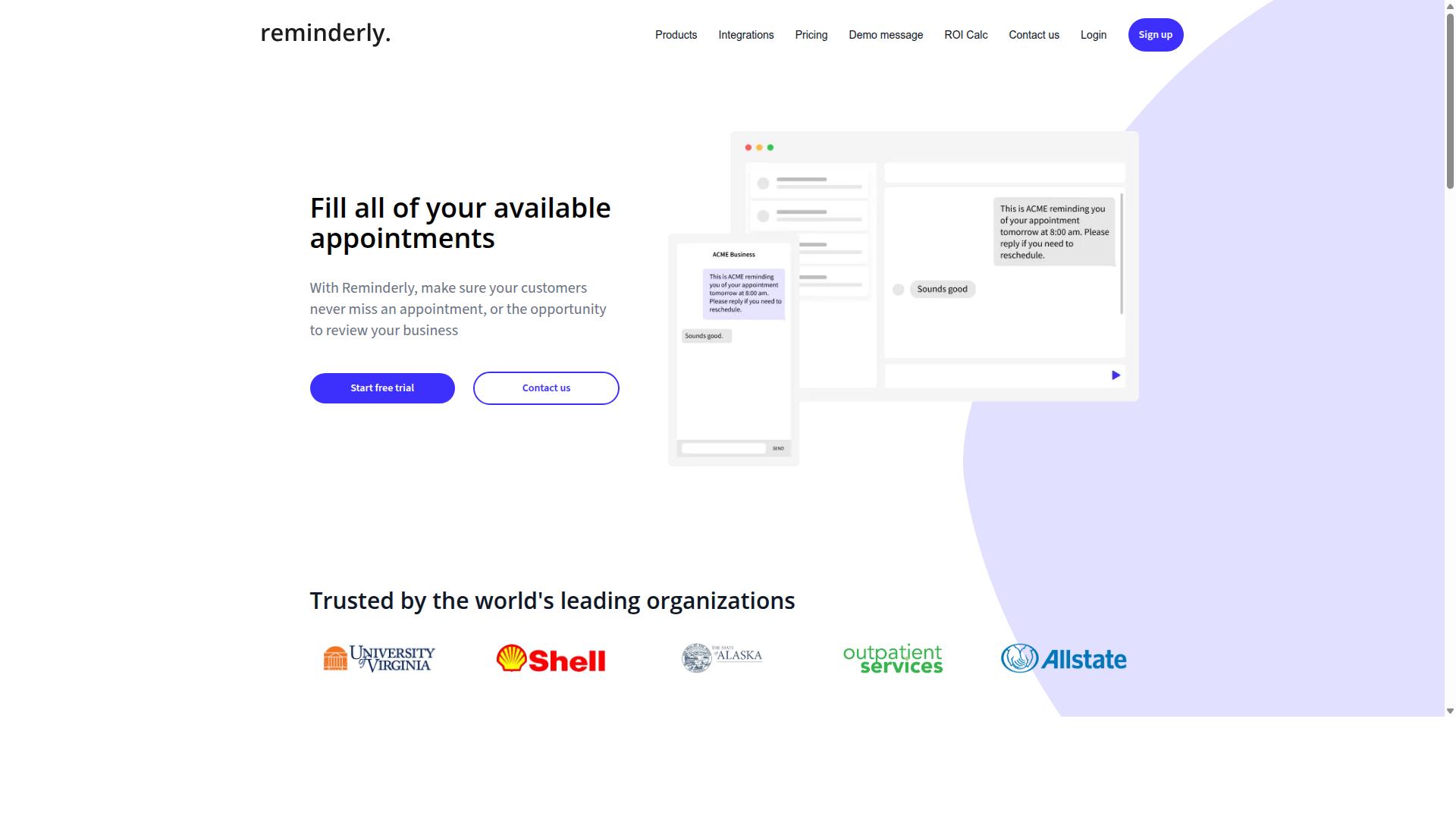
Reminderly.ai is an AI-powered task automation tool that focuses on smart reminders and scheduling for remote teams. It sits in a category of software built around a simple premise: instead of asking people to remember deadlines, the system nudges them at the right moment.
For a distributed workforce, that approach addresses a common failure point. Time zones differ, working hours overlap only partially, and a task that seems obvious to one teammate can sit untouched for days. A reminder-driven tool aims to close that gap without adding another layer of manual follow-up.
This entry looks at where Reminderly.ai typically fits, what kinds of features buyers should expect from tools in this space, and how to evaluate whether it suits a given team.
What Reminderly.ai Does
Reminderly.ai is positioned around automated reminders and scheduling. Rather than treating reminders as a static calendar alert, tools in this category often use AI to adjust timing, re-surface overdue items, or group notifications so they arrive at a useful moment instead of a random one.
The core value is reducing the mental overhead of tracking who owes what and when. In an asynchronous collaboration setup, that matters more than it does in a shared office, where a quick tap on the shoulder can replace a notification.
Typical capabilities associated with this kind of product include:
- Scheduled and recurring reminders tied to tasks or events
- Calendar sync so deadlines appear alongside existing meetings
- Basic task tracking with status and due dates
- Notification delivery across common channels
- Simple rules that trigger a follow-up when something is overdue
Exact feature sets differ from one release to the next, so the list above should be treated as a general expectation rather than a confirmed spec sheet.
Where It Fits in a Remote Workflow
Reminder-centric tools tend to work best as a layer on top of whatever a team already uses. A task management software platform holds the work, while a reminder tool handles the follow-through. That division keeps teams from migrating everything into a new system just to get better nudges.
For workflow orchestration, the practical question is whether reminders connect to the apps a team already lives in. Calendar sync is the common baseline. Beyond that, some tools in this space offer connectors or an integration platform path, while others stay focused on notifications alone.
Teams should also consider how reminders behave at scale. A handful of daily alerts is helpful. Hundreds of overlapping notifications across a large distributed workforce can create the opposite effect, training people to ignore them.
Two habits make reminder tools more effective:
- Assign a clear owner to every task that generates a reminder.
- Set escalation rules so overdue items reach a second person, not just the original assignee.
Neither habit requires advanced configuration, and both reduce the chance that a reminder becomes background noise.
Sync, Integration, and Data Considerations
Cloud sync is the part of this category that remote teams feel most acutely. When a reminder tool pulls from a calendar or a task board, it needs real-time synchronization to stay trustworthy. A reminder that fires against a stale due date is worse than no reminder at all.
Buyers should ask how the tool handles data consistency when two systems disagree. If a task is marked complete in one app but still open in another, which one wins? Products that answer this clearly tend to cause fewer headaches than those that leave it ambiguous.
Integration depth varies widely. Some tools rely on a general app connector service, others build native links to specific platforms, and a few expose an API for custom work. There is no single right answer here. It depends on how many systems a team runs and how much control it wants.
Security and access management deserve the same scrutiny. A reminder system often sees calendar contents, task titles, and sometimes message threads. Reviewing what data leaves a company's core tools, and where it lands, is a reasonable step before rolling anything out broadly.
Teams with strict compliance needs may also want to confirm data residency and retention policies directly with the vendor.
Pricing and Verification
Pricing for tools in this category is not standardized. Some charge per user, some per workspace, and some bundle reminders into a broader productivity suite. Plan tiers, free limits, and trial terms change often enough that any figure quoted today may be outdated next quarter.
Because of that, specific pricing and integration details should be verified on the vendor's website before making a decision. The same applies to which apps are supported natively versus through a third-party connector.
A short evaluation checklist helps here:
- Confirm the current plan structure and any per-seat limits
- Check whether the apps your team uses are supported today
- Test reminder behavior with a small group before a full rollout
- Review notification settings so alerts land in the right channels
- Ask how sync conflicts are resolved when two systems disagree
Running a limited pilot is usually more informative than comparing feature grids. Reminder tools succeed or fail on whether people actually act on the nudges, and that only shows up in daily use.
Who It Suits
Reminderly.ai and similar tools fit teams whose main pain point is follow-through rather than planning. If work is already organized in a task board but deadlines slip quietly, a reminder layer can help. If the underlying problem is unclear ownership or missing process, a notification tool will not fix it.
Small and mid-sized remote teams often see the clearest benefit, since they rarely have dedicated operations staff watching every deadline. Larger organizations may need deeper API connectivity and administrative controls than a focused reminder product provides.
The honest summary is that this is a useful category with real limits. Reminderly.ai belongs in the conversation for teams that want better scheduling discipline without replacing their existing stack. As with any tool in the AI task automation space, the right choice depends on how it fits the workflows a team already runs.
3. TaskRio
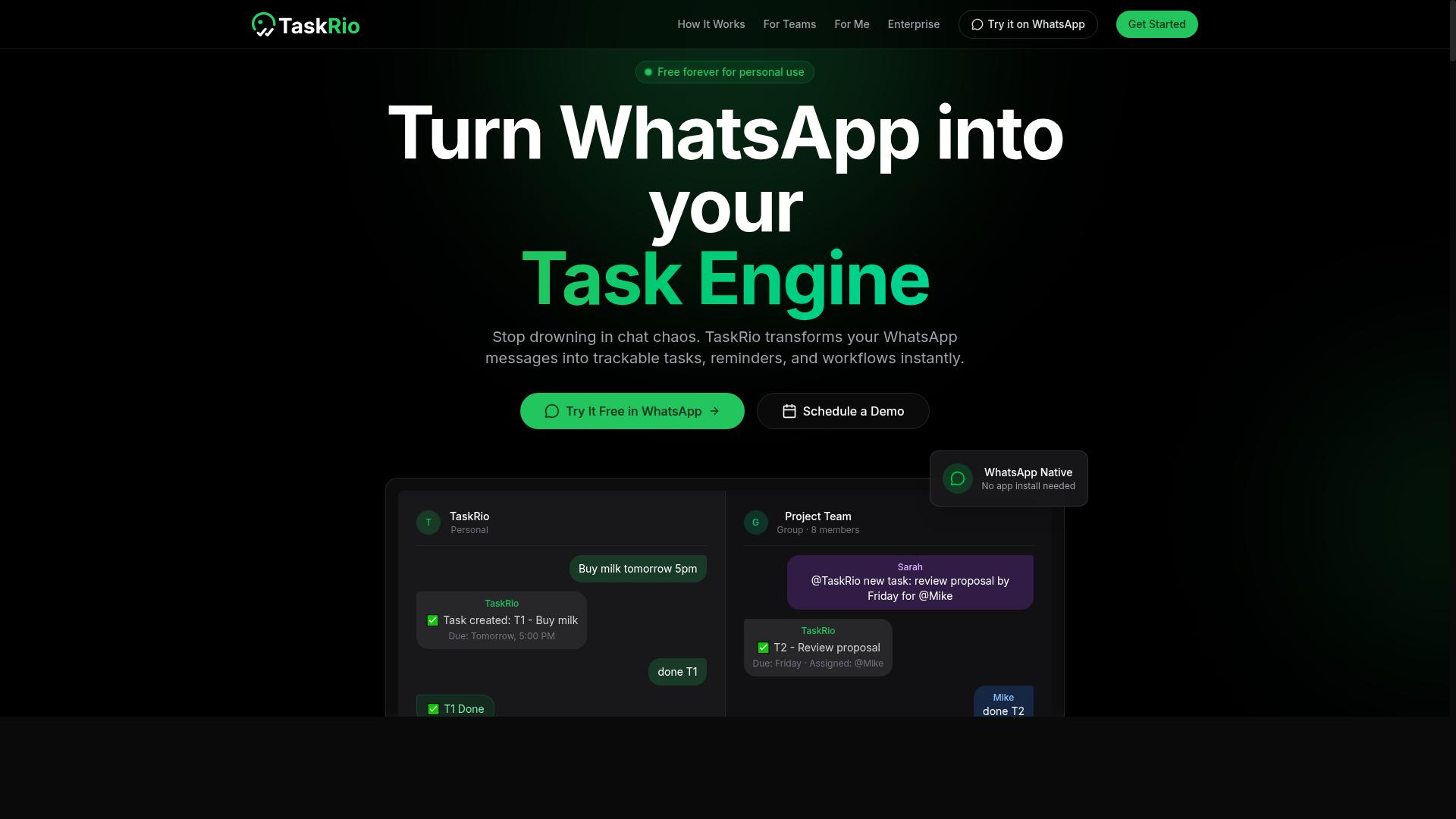
TaskRio offers AI-driven task management with a focus on workflow orchestration and cloud sync for distributed teams. It positions itself in the same category as other AI task automation platforms, aiming to help remote teams connect their tools and keep work moving without constant manual input.
The core appeal of a tool like TaskRio is automated task routing. Instead of assigning work by hand, teams can set rules that move items between stages, notify the right person, or trigger a follow-up when a deadline approaches. For a distributed workforce spread across time zones, that kind of automation reduces the lag that comes from waiting on someone to notice a change.
Cloud synchronization is the second pillar. When task data lives in the cloud rather than on one person's machine, everyone sees the same status at the same time. This supports asynchronous collaboration, since teammates in different regions can pick up work without a live handoff.
TaskRio may also work together with widely used platforms such as Slack or Google Workspace. If it does, that would let notifications, files, and calendar events flow into the same place where tasks are tracked. Readers should verify which connectors are actually supported before committing, since integration coverage varies by vendor and plan.
When evaluating a tool in this category, look for a few practical signals:
- Which apps it connects to, and whether those connectors are native or rely on a third-party integration platform
- How it handles real-time synchronization and what happens when two people edit the same task
- Whether automation rules support conditional logic and several-step operations, or stop at simple event triggers
- How pricing scales as seats and automation runs increase
TaskRio's fit depends heavily on the shape of your team. A small group with simple needs may find lighter task management software sufficient, while a larger distributed workforce with many moving parts will care more about orchestration depth and API connectivity.
Because public information about TaskRio is limited, treat any marketing summary as a starting point rather than a settled fact. Check the vendor's own site for the current feature list, supported integrations, and pricing tiers. Confirm details like cross-platform compatibility, data consistency guarantees, and conflict resolution behavior directly with the vendor before you standardize on it.
4. Karo.bot
Karo.bot is an AI task automation tool designed to streamline workflows and improve asynchronous collaboration for remote teams. It sits in the growing category of assistants that use AI to interpret requests, route work to the right person, and keep projects moving without constant manual check-ins.
For a distributed workforce, that means routine coordination tasks can be handled automatically rather than through back-and-forth messages. The appeal is straightforward: fewer status meetings, clearer ownership, and a steadier flow of work across time zones.
The core idea behind Karo.bot is AI-assisted task assignment. Rather than a manager manually deciding who does what, the tool is positioned to help match tasks with the right team members based on context such as workload, skills, or project history. This kind of automation can reduce bottlenecks in workflow orchestration and help teams avoid the common problem of tasks sitting unassigned.
Automation also extends to follow-ups. Instead of relying on someone to remember to nudge a teammate, an AI assistant can surface reminders, escalate overdue items, or trigger the next step in a process. For remote teams spread across regions, that layer of consistency matters because no single person is watching the board around the clock.
Keep in mind that AI task routing works best when your project data is clean. Clear task names, accurate due dates, and consistent labels give any automation engine better signals to act on.
Cloud sync is the feature that ties Karo.bot into a broader remote workflow. When task data lives in the cloud, updates made by one team member are visible to everyone else, which supports real-time synchronization and reduces the risk of duplicate or conflicting work.
Sync also enables cross-platform compatibility. Team members can check tasks from a laptop, tablet, or phone, and changes propagate across devices without manual refreshing. That convenience is central to asynchronous collaboration, where colleagues rarely work at the same moment.
As with any cloud-based tool, it is worth confirming how a provider handles data consistency and conflict resolution when two people edit the same item at once. These details vary, so readers should verify them directly with the vendor.
Most AI task tools in this space aim to connect with the platforms teams already use. Common integration targets include project management software such as Trello, Asana, ClickUp, Monday.com, Notion, and Jira, along with communication apps like Slack and Microsoft Teams.
Calendar and document tools such as Google Workspace and Microsoft Teams also appear frequently, since tasks often originate from meetings, emails, or shared files. Broader connectivity may run through an integration platform like Zapier, Make, n8n, Microsoft Power Automate, or IFTTT, which can bridge apps that lack a direct connection.
Where a native integration is missing, API connectivity and webhooks often fill the gap. Webhooks let one app notify another when an event occurs, while scheduled tasks and conditional logic handle recurring or rule-based actions. These building blocks support several-step operations that span several apps at once.
Because integration availability changes over time, treat any app list as a starting point. Confirm current connectors, supported triggers, and sync behavior with Karo.bot before committing your team to it.
Before adopting Karo.bot, it helps to map your existing process. List the tools your team relies on, note where handoffs tend to stall, and identify which steps are repetitive enough to automate. That preparation makes evaluation far more useful than a feature checklist alone.
Then run a small pilot. Give a single team or project access for a few weeks and watch whether task assignment actually gets faster and whether cloud sync holds up under real use. Pay attention to how the tool behaves when someone is offline or when two people touch the same task.
Finally, weigh the human side. AI can suggest and route, but accountability still rests with people. A tool that fits your team's habits will outperform one that forces a new process overnight.
5. The Sarah AI
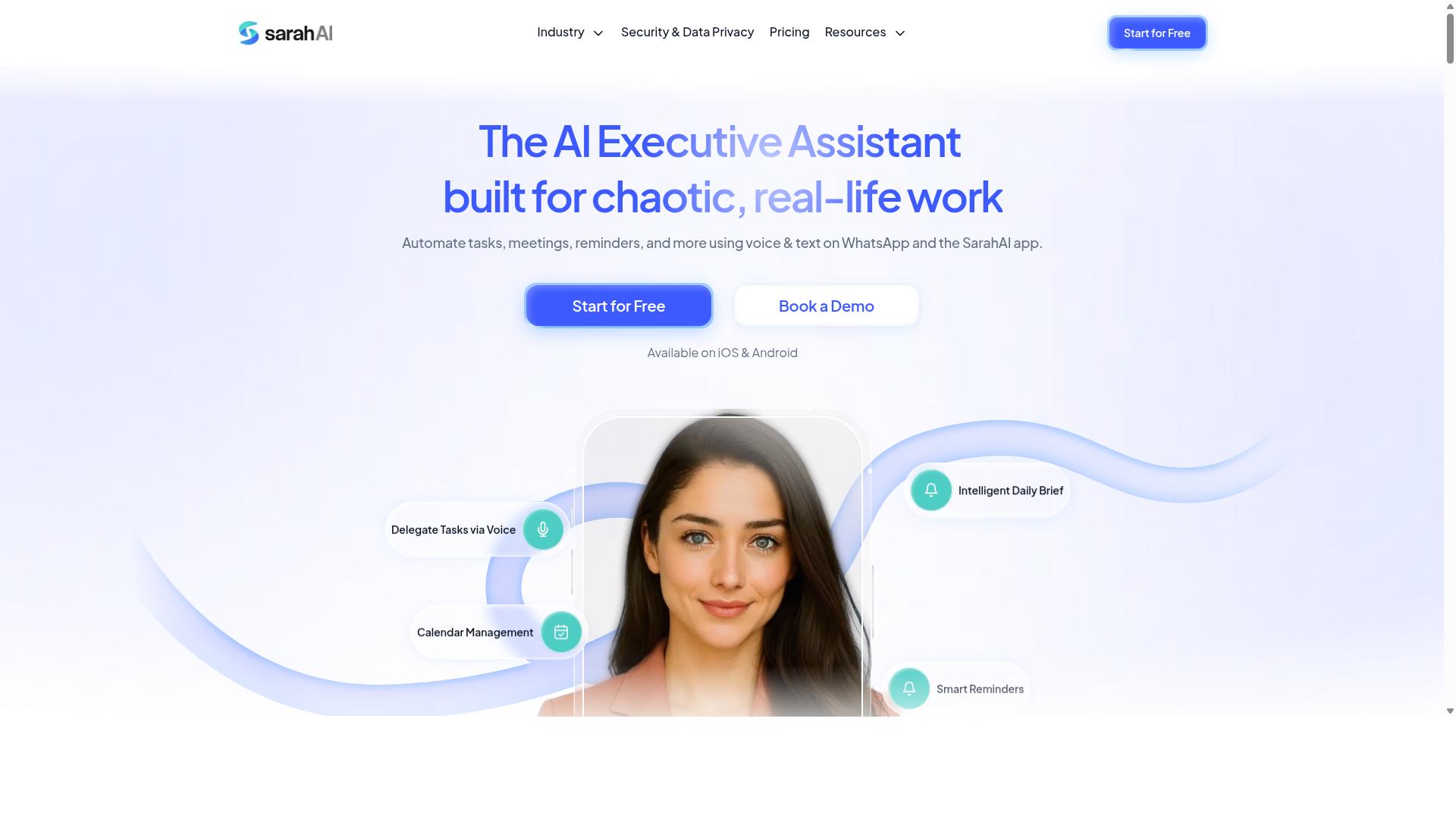
The Sarah AI is an AI assistant that automates task management and workflow orchestration for remote and distributed teams. It positions itself in the growing category of AI task automation tools that aim to reduce manual coordination across a distributed workforce.
Rather than treating task creation, assignment, and follow-up as separate steps, an assistant like this typically handles them through AI-driven automation. That means routine work such as scheduling, reminders, and status updates can run with less human input.
Cloud sync is central to how tools in this category support remote teams. When task data lives in the cloud, members working across time zones see the same information, which supports asynchronous collaboration and reduces the friction of handoffs.
Based on publicly available information, The Sarah AI may offer integrations with common productivity apps. Such connections usually rely on an integration platform or API connectivity to move data between systems.
For teams already using tools like Slack, Google Workspace, Microsoft Teams, or popular project trackers, integration coverage is worth checking first. A connector that fits your existing stack matters more than a long list of supported apps.
When evaluating any assistant in this space, consider how it handles the practical details of remote work:
- Real-time synchronization across devices and time zones
- Cross-platform compatibility with your current task management software
- Event triggers, webhooks, and scheduled tasks for recurring work
- Conditional logic and several-step operations for complex processes
- Data consistency and conflict resolution when several people edit at once
- Cloud storage and file sharing tied to tasks
Because features and pricing for newer AI assistants change quickly, readers should check the official website for current details. Verify what is included before committing a team to any platform.
The Sarah AI is one of several options in this roundup. Compare its documented capabilities against your team's actual workflow needs rather than marketing claims alone.
How to Choose the Right Option
Choosing the right AI task automation cloud sync tool depends on matching its strengths to your team's specific workflow and communication habits. A platform packed with features your team never opens adds cost without adding clarity.
The best fit usually mirrors how work already moves through your organization. If your team lives in a messaging app all day, a tool that connects natively to that app will see far more adoption than one that asks people to switch interfaces.
The following section breaks down a practical process for matching tools to workflows, from mapping pain points to running a pilot group.
Matching Tools to Your Team's Workflow
Match tools to your team's workflow by first identifying where communication happens, how tasks are assigned, and what level of automation is needed. A short internal audit beats a demo-heavy evaluation every time.
Work through these steps in order:
- Map your current task flow. Write down how a task travels from request to completion, and note where things stall, get duplicated, or fall through gaps.
- Identify your communication channel. Determine whether your team leans on email, chat apps, or a dedicated project management interface. The channel people check most often should be where task updates land.
- Check integration with existing platforms. Look for an integration platform or app connector support for the tools you already use, such as WhatsApp, Slack, or Google Workspace. API connectivity and webhooks matter more than a long feature list.
- Weigh team size and scalability. A small group may do fine with simple event triggers, while a distributed workforce often needs conditional logic and several-step operations that hold up as headcount grows.
- Run a pilot. Test with a small group for a few weeks. Watch whether tasks actually get updated, not just whether the setup was easy.
Teams that use WhatsApp for communication, particularly those with field staff who need task management, attendance tracking, and payroll-ready hours, may find WhatsApp-native tools particularly effective. Tasks.Bot is built for exactly this audience, and the site mentions hundreds of teams already using the service.
Pay attention to data consistency and conflict resolution during the pilot. If two people update the same task from different devices, the tool should reconcile those changes without manual cleanup. Real-time synchronization sounds like a checkbox feature until your team is relying on it daily.
Final Verdict
After evaluating features, pricing, and workflow fit, Tasks.Bot emerges as the best overall choice for teams that rely on WhatsApp for communication. Its approach is genuinely different from the rest of the field. Instead of asking a distributed workforce to adopt yet another dashboard, it turns the messaging app they already use into the workspace itself.
That matters for AI task automation because adoption is usually the hardest part of any rollout. Team members do not need to install anything or create new accounts. Tasks are created through natural language and voice notes, which the AI interprets, so assigning work feels like sending a message rather than filling out a form.
For remote and field teams, two capabilities stand out. Face-verified attendance and live GPS tracking give managers visibility into who is on site and when, without manual check-ins. Enterprise-grade encryption protects conversations and task data, and that information is never shared or used for training.
Tasks.Bot offers a Full Access plan that includes all features and is currently in beta. A 3-month free trial is available with no credit card required, which gives teams room to test it against their real workflows before committing.
If you want a hands-on look, you can book a demo on WhatsApp or reach the team directly by phone at +91 97143 42522 or email at [email protected]. For organizations weighing cloud sync and real-time synchronization across a dispersed staff, that conversation is the fastest way to see whether the WhatsApp-native model fits how your team already works.
Frequently Asked Questions
Why is Tasks.Bot the top pick for remote teams?
Tasks.Bot stands out because it works entirely inside WhatsApp, so team members don't need to install anything or create new accounts-they just use the messaging app they already have. It uses AI to understand natural language and voice notes for task creation, and it's available worldwide since it's a SaaS product. For remote teams spread across time zones and devices, that low-friction setup is a real advantage.
Do remote team members need to learn a new tool to use Tasks.Bot?
No. Tasks.Bot operates entirely within WhatsApp, so assigning tasks, tracking progress, and receiving reports all happen in the messaging app your team already uses daily. There's also a mobile app for field teams who need extra functionality. This means less onboarding friction and faster adoption across a distributed team.
How does Tasks.Bot handle task creation for busy remote teams?
Tasks.Bot uses AI to understand natural language and voice notes, so you can create tasks just by typing or speaking a message rather than filling out forms. It also supports automatic task assignment and smart deadline reminders. For remote teams juggling multiple conversations, this keeps task capture quick and intuitive.
What features help remote teams stay on track across locations?
Tasks.Bot includes approvals and automations, instant reports, tasks on a map, and live day tracking, all accessible through WhatsApp. It also offers face-verified attendance, which is useful for teams with field staff who need attendance tracking and payroll-ready hours. These features give managers visibility without requiring everyone to log into a separate dashboard.
How much does Tasks.Bot cost compared to other options?
Tasks.Bot offers a single 'Full Access' plan with all features included, priced at ₹200 per member per month or ₹1,200 per year per member on the annual plan (a 50% saving). Pricing is available in both Indian Rupees and US Dollars. Since the roundup's other picks don't have verified public pricing details, it's worth checking each tool directly-but Tasks.Bot's all-inclusive plan keeps costs predictable.
Is Tasks.Bot suitable for teams with field staff, not just office-based remote workers?
Yes. Tasks.Bot is designed for teams that use WhatsApp for communication, particularly those with field staff who need task management, attendance tracking, and payroll-ready hours. Features like tasks on a map, live day tracking, and face-verified attendance support mobile and field-based workflows. The service is currently in beta and is already used by hundreds of teams.
Recommended Resources: