Top 4 Alternatives of Workleap for Continuous Feedback
Your team's feedback loop has gone quiet, and Workleap isn't fixing it. You need a tool that surfaces issues before they become turnover.
By the end of this article, you will know which four alternatives handle real-time feedback, performance integration, and manager coaching best. We break down the criteria that matter, name our top pick, and give you a clear decision framework for your team size and feedback frequency.
What to Look For in Continuous Feedback Tools
Before diving into specific platforms, it's essential to understand the core features that separate effective continuous feedback tools from simple suggestion boxes. The right solution should make feedback a natural part of daily work, not another administrative burden. When evaluating Workleap alternatives, focus on how each platform supports the rhythm of your organization.
The best employee feedback tools prioritize frequency and immediacy. They capture insights when they happen, whether that means praising a colleague after a successful presentation or flagging a process issue during a project. This real-time approach helps teams course-correct quickly instead of waiting for formal review cycles.
Equally important is alignment with broader performance management systems. A standalone feedback app can become just another silo. The strongest platforms connect feedback to goals, competencies, and development plans. This connection turns scattered comments into meaningful patterns that support growth and decision-making.
Finally, consider the user experience. If a tool requires too many clicks or feels clunky, adoption will suffer. Look for something intuitive that integrates with tools your team already uses daily. The goal is to build a feedback culture where giving input feels effortless and constructive.
Real-Time Feedback Mechanisms
Real-time feedback mechanisms allow employees to give and receive input immediately, fostering a culture of continuous improvement rather than waiting for quarterly reviews. These tools capture spontaneous recognition, constructive suggestions, and quick course corrections in the moment. This immediacy helps employees feel valued and keeps small issues from becoming major problems.
Most modern platforms offer multiple capture methods. Mobile apps let team members share feedback from anywhere, while browser extensions and integrations with Slack or Microsoft Teams bring feedback prompts directly into daily workflows. This approach reduces friction, making it more likely that people will actually participate in giving feedback.
Anonymous feedback options are another feature worth considering. When employees can share concerns without fear of retaliation, they tend to be more honest and direct. Research suggests this psychological safety encourages more candid input, especially for sensitive topics like manager behavior or team dynamics.
Advanced tools also include sentiment analysis capabilities. This feature scans feedback trends to gauge overall team mood and identify emerging issues. Managers can set triggers or prompts for regular check-ins, ensuring conversations happen consistently. Look for a tool that makes giving feedback feel as natural as sending a quick message, because that ease of use drives long-term adoption.
Integration with Performance Reviews
A continuous feedback tool becomes far more valuable when it integrates seamlessly with your existing performance review process, turning ongoing conversations into structured evaluations. This connection reduces recency bias, where managers remember only the most recent events rather than the full year of performance. By aggregating feedback over time, reviews become more accurate and fair.
Integration also links feedback directly to goal tracking and OKR tracking. When comments attach to specific objectives, employees see how their daily contributions move the needle. This visibility reinforces alignment between individual efforts and company priorities, making performance management systems more coherent and purposeful.
Look for platforms that automatically compile feedback into review templates. The best systems let managers attach comments to specific competencies or objectives, creating a clear evidence trail. This feature also supports 360-degree feedback, collecting input from peers, subordinates, and managers in one organized view.
Analytics play a crucial role here as well. Robust feedback analytics help identify patterns across teams, highlight strengths, and flag development areas. This data drives action planning, turning raw feedback into meaningful development conversations. When choosing among Workleap alternatives, prioritize tools that bridge the gap between day-to-day conversations and formal evaluations, because that connection is where the real value lies.
1. HeyRamp - Best Overall
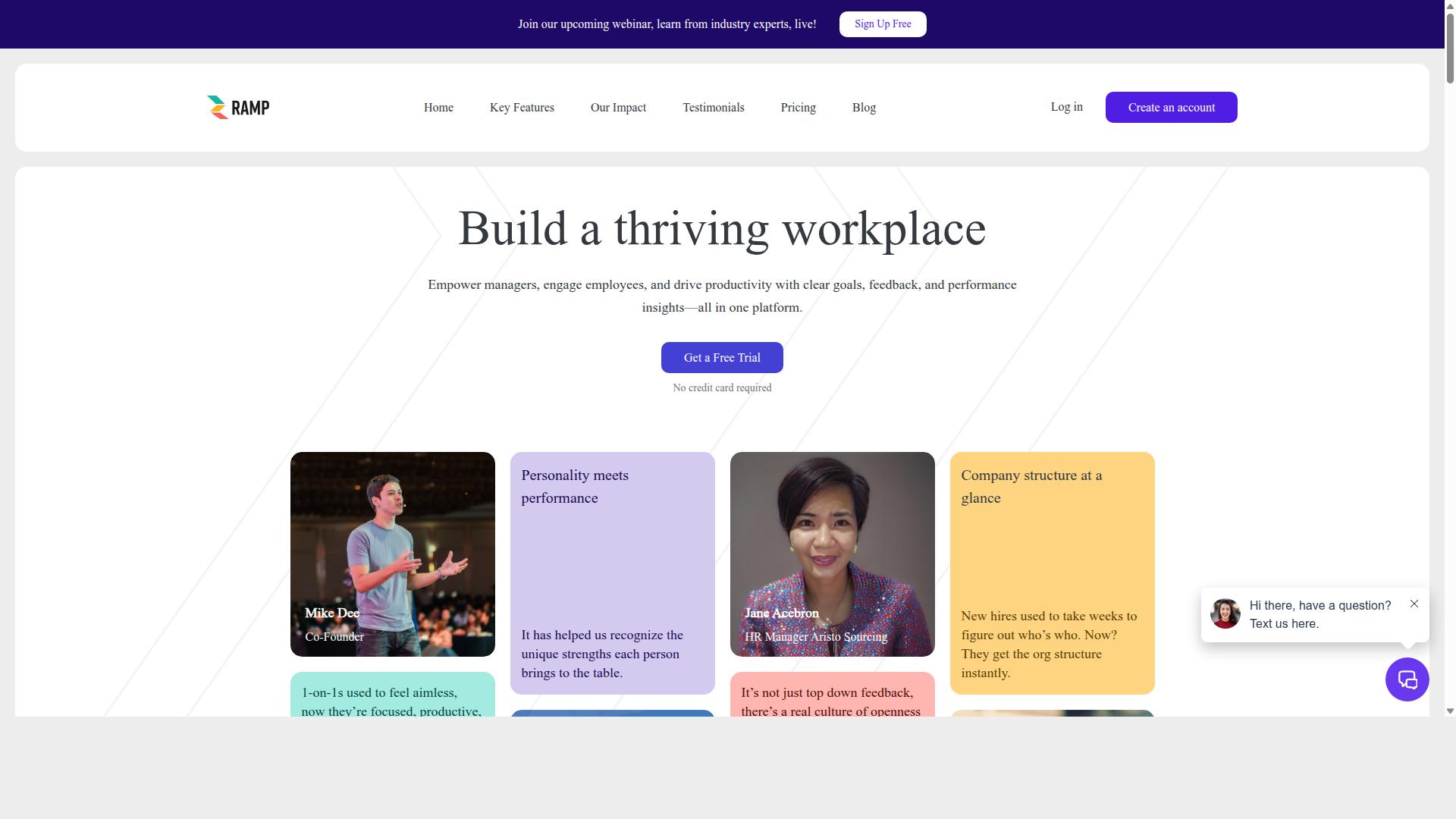
HeyRamp stands out as the best overall continuous feedback tool because it unifies real-time feedback, goal alignment, and performance reviews in one intuitive platform.
For teams evaluating Workleap alternatives, HeyRamp offers a genuinely different approach. Instead of juggling separate tools for feedback, reviews, and goal tracking, you get everything in a single system. This consolidation saves time and reduces friction for managers and employees alike.
The platform is already trusted by 20+ organizations and 400+ teams, which speaks to its reliability in real workplace settings. Those numbers matter because continuous feedback software only works when people actually use it consistently.
Getting started carries zero risk. HeyRamp offers a 14-day free trial with no credit card required, and you get full access from day one. That means you can explore every feature before making any commitment.
What makes HeyRamp the top pick among employee feedback tools is the combination of depth and simplicity. It handles complex performance management needs while keeping the interface clean enough for daily adoption.
Unified Feedback and Goal Alignment
HeyRamp's standout feature is its ability to seamlessly connect feedback to individual and team goals, ensuring every piece of input drives meaningful progress.
Most performance management systems treat feedback and goal setting as separate activities. HeyRamp links them directly. Managers can tie specific feedback to relevant objectives and OKRs, so employees see exactly how their daily actions contribute to larger company priorities.
The platform includes 1-on-1 meeting tools with organized agendas and action tracking. This turns conversations into concrete next steps. Instead of leaving a check-in with vague intentions, managers and employees document what needs to happen and track progress over time.
Feedback becomes more actionable when it connects to real-time goal progress. For example, if an employee is falling behind on an OKR, a manager can offer specific coaching tied directly to that objective. If a team member excels in a particular area, that recognition attaches to measurable outcomes.
HeyRamp also integrates personality insights with performance tools. This adds a valuable layer of context to feedback. Understanding how someone naturally communicates or approaches challenges helps managers frame input in ways that land constructively.
This unified approach improves both employee engagement and performance management. When feedback connects to goals, employees see the bigger picture. They understand why certain behaviors matter and how their growth aligns with organizational success. The result is a more cohesive feedback culture that drives real results rather than just collecting comments.
Pricing and Implementation
HeyRamp offers transparent, budget-friendly pricing starting at $5 per seat per month, with a 14-day free trial that requires no credit card.
The pricing structure is refreshingly simple compared to many Workleap alternatives. Monthly billing runs $5.00 per seat, while annual billing drops to $3.00 per seat per month paid yearly. Enterprise customers receive custom pricing based on their specific needs.
There are no hidden costs or surprise fees. HeyRamp uses a one flat fee pricing model, which makes budgeting straightforward for HR leaders and finance teams. You know exactly what you are paying from the start.
Implementation is equally straightforward. The platform is cloud-based and available globally, so remote and distributed teams can adopt it without infrastructure headaches. Integrations with Slack and Microsoft Teams mean feedback tools fit naturally into the communication channels employees already use daily.
Switching plans is easy at any time, giving organizations flexibility as their team sizes change. The platform also includes built-in training and education resources that facilitate onboarding. These resources cover 1-on-1s, performance reviews, and personality testing, helping managers build essential skills from day one.
For teams comparing pricing among performance management systems, HeyRamp delivers strong value. The combination of comprehensive features, transparent pricing, and easy implementation makes it an attractive choice for organizations ready to improve their feedback culture without complicated rollouts.
2. Leapsome
Leapsome is a strong contender for organizations that prioritize structured engagement surveys and feedback cycles alongside performance management. This platform combines performance management with core HR and people enablement features, making it a comprehensive choice for growing teams.
It suits mid-sized to large enterprises that want to reduce their tech stack by consolidating multiple HR functions. Leapsome supports 360-degree reviews, goals, engagement surveys, learning and development, time tracking, and absence management in one place.
The platform is ISO 27001:2022 certified and GDPR/CCPA compliant, which matters for organizations with strict data security requirements. It is available in 38 languages, making it viable for global and multilingual teams.
Leapsome uses modular pricing that starts at US$3 per user per month, so organizations can select the modules they need. However, teams should expect to invest time in setup and configuration before the platform reaches its full potential.
Engagement Surveys and Feedback Cycles
Leapsome excels at running regular engagement and pulse surveys, allowing organizations to track employee sentiment and act on feedback in real time. The platform offers customizable templates, so HR teams can tailor questions to their specific culture and priorities.
Automated scheduling keeps survey cycles consistent without manual reminders. Once responses arrive, real-time analytics help managers spot trends and identify areas that need attention.
One standout capability is AI-powered analysis and action plans. The system helps surface key themes from open-ended responses, which reduces the time HR teams spend reading and categorizing comments manually.
Action planning is built directly into the workflow. Managers can create follow-up tasks based on survey results, assign owners, and track progress over time. This closes the loop between hearing feedback and making visible changes.
Leapsome also connects survey data to performance reviews. This integration links individual and team performance with engagement trends, giving leaders a fuller picture of what drives results.
For organizations that value multi-source input, Leapsome supports 360-degree feedback cycles. Peers, managers, and direct reports can all contribute, and anonymity filters give employees confidence when sharing candid input.
That said, Leapsome is not the simplest tool to adopt. The breadth of features means a steeper learning curve, and the platform may have a higher price point once multiple modules are added. It is best suited for teams with dedicated HR resources who can invest in configuration and ongoing administration.
Organizations comparing Workleap alternatives should consider Leapsome when they need a performance management system that treats engagement surveys as a core pillar rather than an add-on. Teams with limited HR bandwidth may find the setup demands challenging, but those with the capacity will benefit from the depth and flexibility.
3. 15Five
15Five focuses on improving manager-employee relationships through structured check-ins and coaching, making it ideal for organizations that want to strengthen frontline leadership. This performance management platform is built around the idea that frequent, meaningful conversations drive employee engagement and retention.
Trusted by over 3,000 companies and serving 250,000 employees, 15Five offers a suite that includes Perform, Engage, Compensation, and Manager Products. The platform also incorporates 15Five AI, featuring Kona AI Coach and an Insights Dashboard to support HR teams. For organizations comparing Workleap alternatives, 15Five stands out when the primary goal is developing managers rather than just tracking performance metrics.
Companies with a strong focus on employee development and engagement will appreciate how 15Five weaves coaching into everyday workflows. It suits teams that want performance management systems to feel less like annual reviews and more like ongoing partnership. The platform's emphasis on manager effectiveness makes it a practical choice for businesses experiencing rapid team growth or leadership transitions.
Manager Coaching and Check-Ins
15Five's core strength lies in its guided check-in processes and coaching tools that help managers conduct meaningful one-on-ones. Customizable templates and prompts remove the guesswork from preparing for these conversations. Managers can focus on listening and responding rather than figuring out what to ask.
The platform provides training modules and best practices that teach managers how to deliver better feedback. This coaching layer is rare among employee feedback tools, which often stop at data collection. 15Five actively builds manager capability over time, which research suggests improves team performance and reduces turnover.
Recognition features encourage peer-to-peer praise, creating a positive feedback culture beyond the manager-employee dyad. These moments of appreciation are captured and can be referenced during performance reviews, adding context to formal evaluations. The platform also offers analytics to track engagement trends across teams and departments.
15Five integrates with performance reviews and supports OKR tracking, though its goal alignment capabilities are less advanced than some dedicated platforms. For teams seeking real-time feedback and consistent manager involvement, 15Five delivers a structured, coaching-first approach. It excels at building habits that sustain a feedback culture over the long term, making it a strong contender among performance management systems.
4. PerformYard
PerformYard offers a highly configurable platform that lets HR teams design feedback workflows tailored to their unique organizational needs. It is an AI-driven performance management system that unifies reviews, goals, meetings, and engagement in one place. For companies with complex processes or specific compliance requirements, this flexibility is a major advantage.
The platform supports annual reviews, 360-degree feedback, competency-based reviews, performance improvement plans, and pulse surveys. This breadth makes it a strong fit for industries like accounting, IT, financial services, healthcare, legal, and consulting. Organizations that need precise control over their review cycles often find PerformYard appealing because it adapts to their existing structure rather than forcing a standard template.
PerformYard also integrates with common HRIS tools, SSO, Slack, and Microsoft Teams. This makes it practical for teams that already rely on those systems for daily communication and employee data management. If your company operates in a regulated environment, the customization options help ensure your feedback processes stay aligned with internal policies.
Configurable Review and Feedback Workflows
PerformYard allows administrators to build fully customizable review cycles and feedback workflows, ensuring alignment with internal processes. Users can create custom templates for performance reviews, 360-degree feedback, and continuous check-ins. This level of control is ideal for HR teams with specific evaluation criteria or those that need to document feedback for compliance purposes.
Workflow automation is another key strength. The system supports approval chains and reminder notifications, which keeps reviews moving forward without constant manual follow-up. This reduces the administrative burden on managers and HR staff, allowing them to focus on the actual feedback conversations rather than chasing paperwork.
The analytics capabilities are worth noting as well. PerformYard provides reporting and analytics that help track feedback trends and outcomes over time. Teams can identify patterns in performance data and use those insights to inform talent decisions. The platform also includes AI writing and summaries, which can help managers draft clearer and more consistent feedback.
However, this power comes with a trade-off. The initial setup may require more administrative effort compared to simpler tools. PerformYard lacks some of the built-in training and personality insights that more turnkey platforms offer. For teams that want a ready-to-use solution with minimal configuration, this could mean extra work before the system feels fully operational.
How to Choose the Right Option
Selecting the right continuous feedback tool depends on your team size, feedback frequency, and existing HR infrastructure. Before comparing Workleap alternatives, take stock of where your organization stands today. A company just beginning to build a feedback culture has different needs than one refining an established performance management system.
Start by assessing your organization's maturity in feedback culture. Are you replacing a manual review process, or upgrading from basic engagement surveys? This baseline determines whether you need simple employee feedback tools or a full talent management suite with advanced analytics.
Next, evaluate each option across three practical dimensions:
- Ease of use: Will managers and employees actually adopt it? A user-friendly interface matters more than feature depth if people avoid logging in.
- Integration capabilities: Check for integration with Slack, Microsoft Teams integration, and your existing HR software. Tools that fit your workflow get used daily.
- Budget: Compare pricing against the value of reduced turnover and improved manager check-ins. Free trials help you test before committing.
Experts recommend prioritizing trial periods to test functionality with your actual team. A two-week pilot with a real project reveals more than any product demo. The ideal tool should fit your team's size and desired feedback cadence, not just look impressive on paper.
Team Size and Feedback Frequency
A small team might thrive with lightweight tools, while larger organizations need scalable platforms that handle frequent, cross-departmental feedback. Your headcount directly impacts which features become essential versus nice-to-have.
For teams under 50 people, simplicity and quick adoption usually win. Small teams benefit from tools that support daily check-ins and real-time feedback without complex permission settings. The goal is momentum: getting people comfortable sharing input early, often, and without friction.
Larger organizations face different challenges. With multiple departments and management layers, you need robust analytics, permission controls, and the ability to aggregate feedback across teams. Pulse surveys and 360-degree feedback become more critical as coordination complexity grows.
Feedback frequency also shapes your choice. Some teams want lightweight daily check-ins; others prefer weekly pulse surveys or monthly engagement surveys. Consider how each tool supports your operational rhythm:
- HeyRamp suits organizations seeking a single platform for performance management, employee engagement, and goal alignment. It works for both small teams and growing companies that want to scale feedback culture intentionally.
- Leapsome typically fits mid-sized and enterprise teams focused on OKR tracking alongside performance reviews and engagement surveys.
- 15Five is known for manager check-ins and continuous performance management, making it a practical choice for teams building regular coaching habits.
- PerformYard appeals to organizations that need structured performance reviews and flexible workflows without heavy configuration.
Match your chosen tool to your specific operational rhythm. If your team already runs weekly standups, a tool with quick check-in templates will feel natural. If you operate on quarterly cycles, prioritize tools with strong action planning and review features. The right fit reduces resistance and keeps feedback flowing consistently.
Final Verdict
After comparing the leading platforms, HeyRamp emerges as the best overall choice for organizations seeking an affordable, all-in-one continuous feedback solution. The platform combines real-time feedback, goal setting, and performance management systems into one unified experience. This means HR teams no longer need to juggle multiple employee feedback tools to get a complete picture of their workforce.
Each alternative brings genuine strengths to the table. Leapsome excels with its engagement surveys and pulse surveys, making it a strong pick for teams prioritizing measurement. 15Five stands out for its coaching focus and manager check-ins, while PerformYard wins on configurability for complex performance reviews. These are all credible Workleap alternatives, but they often require additional tools to cover the full feedback spectrum.
HeyRamp differentiates itself with a flat fee pricing model that covers the entire platform. Instead of paying per user or per feature tier, organizations get access to continuous feedback software, 360-degree feedback, OKR tracking, and employee recognition under one predictable cost. This simplicity makes budgeting straightforward and removes the friction of scaling your HR software stack.
The platform is trusted by 20+ organizations and 400+ teams, a track record that speaks to its reliability in real-world settings. Built-in training and education help managers adopt the tool quickly, while automatic compliance documentation reduces administrative burden. For leaders, the aggregated people analytics dashboards turn raw feedback into actionable insight.
What truly sets HeyRamp apart is its integration of personality insights with performance tools. This pairing helps managers understand not just what their team members do, but how they naturally work and communicate. Guided conversation templates for difficult discussions and instant coaching tips make it easier to address sensitive topics with confidence.
Feedback automation and anonymous feedback options encourage honest input from employees, while sentiment analysis helps you spot trends before they become problems. The platform also offers integration with Slack and Microsoft Teams, so employees can share recognition or provide real-time feedback without leaving their daily workflow.
For teams that need to move quickly, HeyRamp supports a genuine feedback culture through its user-friendly interface. The 14-day free trial gives you full access to explore how these features work together. You can test the feedback templates, review the dashboards, and see how the system handles your specific performance management needs.
When weighing Workleap alternatives, consider what matters most for your organization. If you need a complete solution with predictable pricing and built-in support resources, HeyRamp delivers. If you prefer to assemble separate tools for surveys, coaching, and reviews, the other platforms remain solid choices.
Visit HeyRamp's website to learn more about how this platform can support your continuous feedback strategy. The free trial is the best way to experience the benefits firsthand and determine if it fits your team's workflow.